
Ground black pepper is made from dried peppercorns that have been ground into a powder.
Black pepper comes from the fruit of the pepper plant. The peppercorns are harvested, processed, dried, and eventually ground for use as a seasoning.
Its familiar sharp and slightly spicy flavor comes from naturally occurring compounds, particularly piperine.
Black pepper has been used for centuries in cooking and is one of the world’s most familiar spices.
It can be added to almost anything from soups and stews to vegetables, eggs, meat, sauces, rice, pasta, salads, and roasted foods.
Because the flavor is concentrated, a relatively small amount can make a noticeable difference in a dish.
Is One Container Healthier Than the Other?
Not necessarily.
If both containers contain ordinary pure ground black pepper, the smaller and larger packages aren’t automatically different in terms of health benefits simply because one is bigger.
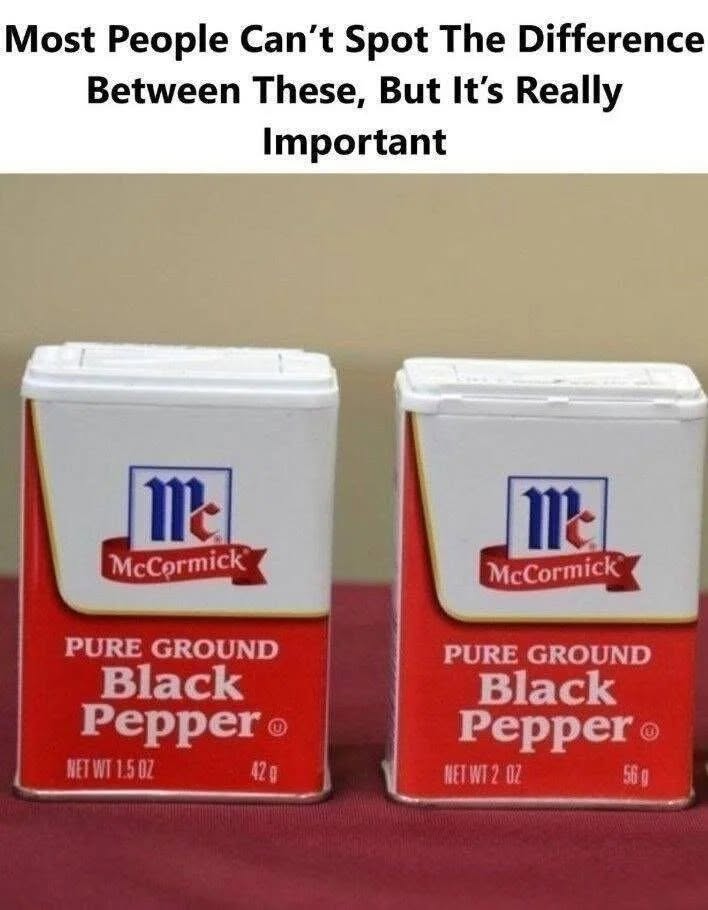
The main difference shown in the photograph is quantity.
A larger package doesn’t mean you should consume more pepper. It simply gives you more of the same product.
Black pepper can be part of a varied diet, but it should be thought of primarily as a seasoning rather than a miracle health product.
You may see claims online suggesting that black pepper can detox the body, melt fat, cure disease, or dramatically improve health. Such claims should be treated cautiously.
Adding black pepper to nutritious meals is perfectly reasonable, but no single spice can replace a balanced diet, adequate sleep, physical activity, or appropriate medical care.
Why Net Weight Matters When Shopping
Imagine you see two nearly identical spice containers.
One costs $2 and contains 42 grams.
The other costs $2.25 and contains 56 grams.
At first glance, the second container looks more expensive because its sticker price is higher.
But that doesn’t tell you which one provides better value.
The first container costs approximately 4.8 cents per gram.
The second costs approximately 4.0 cents per gram.
So even though the second package costs more at the checkout, it actually gives you more pepper for each unit of money.
This is why experienced shoppers often compare unit prices, not just package prices.
The same principle applies to:
- Spices
- Rice
- Pasta
- Flour
- Sugar
- Coffee
- Tea
- Cereal
- Nuts
- Laundry detergent
- Cleaning products
- Paper products
- Cooking oils
- Pet food
A larger-looking package isn’t automatically a better deal, and a cheaper-looking package isn’t automatically cheaper per gram.
Why Package Size Can Be Easy to Miss
When you’re shopping quickly, your eyes naturally focus on the largest information on the label.
You might notice:
BLACK PEPPER
but overlook:
NET WT 1.5 OZ
The same thing happens with many other products.
Companies use different package sizes for a variety of reasons. Stores may also stock several versions of the same product, and packaging can change over time.
The difference may be printed in a relatively small area near the bottom of the package.
That’s why it’s worth developing a simple habit:
Always check the net weight before comparing prices.
It takes only a few seconds.
Is More Always Better?
Not necessarily.
If you rarely use black pepper, buying a larger container simply because it contains more may not be the best choice.
Spices don’t necessarily become dangerous when they get old, but their flavor and aroma can gradually decline.
Ground spices generally lose freshness faster than whole spices because grinding exposes more surface area to air.
If you use pepper only occasionally, a smaller container may make sense because you have a better chance of finishing it while its flavor is still strong.
If you cook frequently and use pepper almost every day, a larger package may be more convenient.
The best size depends on how quickly your household uses the product.
How to Store Ground Black Pepper
Proper storage helps maintain the quality of ground pepper.
Keep the container:
- Tightly closed
- In a cool, dry place
- Away from direct sunlight
- Away from steam
- Away from the stove or other strong heat sources
- Away from areas with high humidity
One common mistake is keeping spices directly beside a boiling pot.
Steam can enter the container when the lid is opened, introducing moisture and potentially causing the powder to clump.
A dry pantry or cupboard is generally a better location.
Ground Pepper vs. Freshly Ground Pepper
There is also another important difference that isn’t visible from the photograph.
Ground black pepper and freshly ground pepper come from the same basic spice, but their flavor can be noticeably different.
Whole peppercorns retain their aroma and flavor compounds better because the interior is protected until the peppercorn is ground.
When pepper is freshly ground, it can have a stronger aroma and more pronounced flavor.
Pre-ground pepper is convenient and perfectly useful for everyday cooking.
Freshly ground pepper, however, can be especially enjoyable when you want a stronger pepper flavor.
Neither option has to replace the other.
Many kitchens use both.
How Much Black Pepper Should You Use?
There isn’t one universal amount that everyone should use.
It depends on the recipe and your personal taste.
For a soup or stew, you might add a small amount during cooking and adjust the seasoning near the end.
For eggs, roasted vegetables, potatoes, or salads, freshly ground pepper can be added according to taste.
If you’re preparing food for someone who is sensitive to spicy flavors, start with a small amount.
It’s much easier to add more pepper than to remove it after you’ve added too much.
A Simple Black Pepper Seasoning Mix
If you want to use your ground pepper in an everyday seasoning blend, you can combine it with other common kitchen ingredients.
Ingredients
- 2 tablespoons ground black pepper
- 1 tablespoon garlic powder
- 1 tablespoon onion powder
- 1 tablespoon paprika
- 1 teaspoon dried oregano
- 1 teaspoon dried thyme
Directions
Place all the ingredients in a completely dry bowl.
Mix thoroughly until the spices are evenly distributed.
Transfer the mixture to a clean, dry airtight container.
Use a small amount to season roasted vegetables, chicken, potatoes, soups, rice, beans, or other savory dishes.
Remember that this homemade blend contains no added salt, so you can control the amount of salt separately according to your recipe and dietary needs.
How to Tell if Ground Pepper Is Still Good
Ground black pepper usually doesn’t suddenly become unsafe simply because it has passed its best-quality period.
Instead, one of the biggest changes is usually loss of flavor and aroma.
If your pepper smells weak, tastes flat, or has lost much of its characteristic sharpness, it may simply be old.
However, if a spice has become wet, developed visible mold, has an unusual smell, or has been contaminated by insects or other substances, it should be discarded.
Always keep spices dry and properly sealed.
The Bigger Lesson Behind the Picture
The photograph may look like a simple comparison between two pepper containers, but it demonstrates an important shopping lesson.
Never judge a product solely by the appearance of the package.
Look at the details.
Check the net weight.
Check the price.
Compare the unit price when available.
Then decide whether the quantity makes sense for how often you use the product.
In this particular image, the two containers appear almost identical, but one contains 42 grams and the other contains 56 grams.
That’s the detail many people overlook.
And it isn’t just useful for black pepper.
The same habit can save you from accidentally paying more for a smaller quantity of many everyday products.
Final Thoughts
The two containers in the picture aren’t a mystery after all.
They are both labeled pure ground black pepper, but they contain different quantities. The left container contains 1.5 ounces (42 grams), while the right contains 2 ounces (56 grams).
The important lesson isn’t simply about pepper.
It’s about becoming a more careful shopper.
Whenever two products look almost identical, take a moment to check the small print. The net weight can tell you something that the large label doesn’t.
A few seconds of comparison can reveal whether you’re buying more, buying less, or simply paying a different price for essentially the same type of product.
And when it comes to spices, remember that freshness, proper storage, and the amount you actually use matter just as much as the size of the container.
So the next time you reach for a spice jar, don’t just look at the front.
Turn it around, check the weight, compare the quantity, and then decide.