
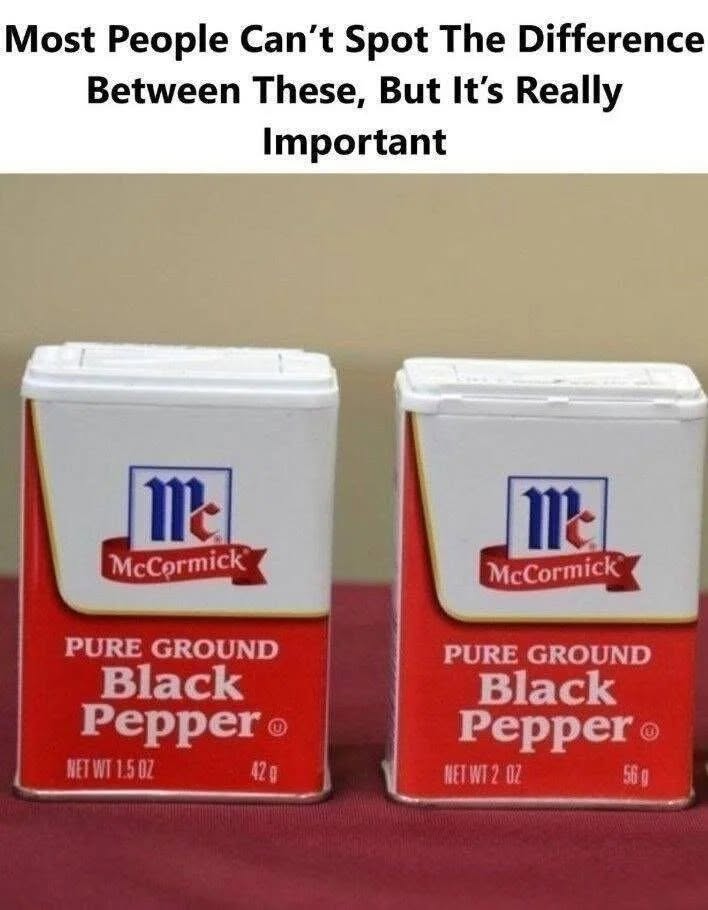
t first glance, the two containers in the picture look almost exactly the same. They have the same brand, the same white-and-red packaging, the same label, and the same words: Pure Ground Black Pepper.
So why are they different?
The answer is surprisingly simple: the containers hold different amounts of black pepper.
The container on the left is labeled 1.5 ounces (42 grams), while the container on the right is labeled 2 ounces (56 grams). The pepper itself is not necessarily a different type of pepper. The most obvious difference is the quantity inside the package.
This small detail is worth noticing because package size can easily affect how much you are actually paying for a product. Two containers can look nearly identical while containing noticeably different amounts.
The Difference Is in the Weight
Look closely at the bottom of each container.
The container on the left says:
NET WT 1.5 OZ — 42 g
The container on the right says:
NET WT 2 OZ — 56 g
That means the container on the right contains 14 grams more pepper.
Fourteen grams may not sound like much, especially when you’re looking at a small spice container. However, compared with 42 grams, it represents about one-third more pepper.
In other words, if two packages have a similar appearance but one contains 42 grams and the other contains 56 grams, comparing only the shelf price can be misleading.
The better question is:
How much am I paying for each gram or ounce?
That is one of the most useful shopping habits you can develop when buying spices, coffee, cereal, snacks, cleaning products, and many other packaged goods.
Why Do the Containers Look So Similar?
Manufacturers often use similar packaging for different sizes of the same product.
This makes sense from a production standpoint. A company can maintain the same recognizable design while offering different quantities for different customers.
One shopper might want a small container because they use black pepper occasionally. Another household might cook every day and prefer the larger size.
The label and design can remain almost identical, while the net weight changes.
This is why the small print showing net weight is important.
The large lettering usually tells you what the product is. The smaller lettering tells you how much product you’re actually buying.